“A Deeper Look” is our new series that further dives into the background of projects as they navigate the approval process. We hope to use this series to shine a light on projects that have high community interest.
Before You Begin
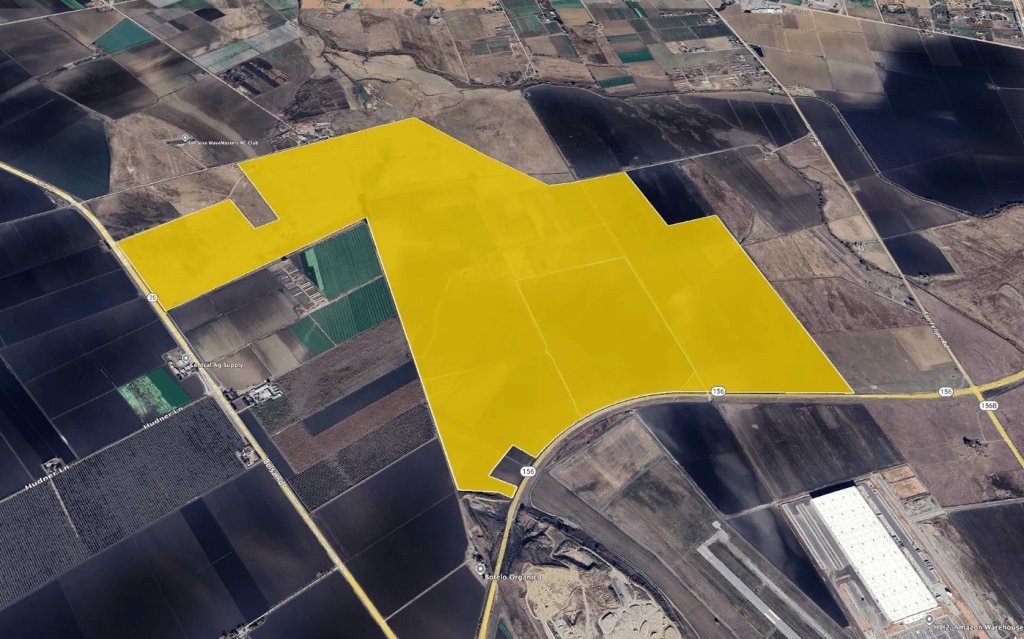
Previously, we wrote about the Allium solar project and how it is a proposed 945-acre solar and BESS facility. You can read that initial article here. We wanted to dig deeper into the proposed facilities background, dig into its chances of making it through approvals, and assess state laws regarding this type of project. Buckle up, we’ve found quite a bit!
- Community Choice Aggregator (CCA) is a local public agency that buys electricity on behalf of residents and businesses, while the existing utility (like PG&E) still delivers the power, maintains the grid, and provides billing. Central Coast Energy (3CE) is the current CCA for San Benito County.
- Power Purchase Agreement (PPA) is a long-term contract where a buyer agrees to purchase electricity from a specific power plant at agreed prices and terms.
- CEQA (the California Environmental Quality Act) is a state law that requires government agencies to study and disclose the environmental impacts of proposed development projects before making approval decisions.
You can also view Longroad Energy’s site for the Allium Project here.
The Allium Project Already Has a Contract With a North Bay Provider
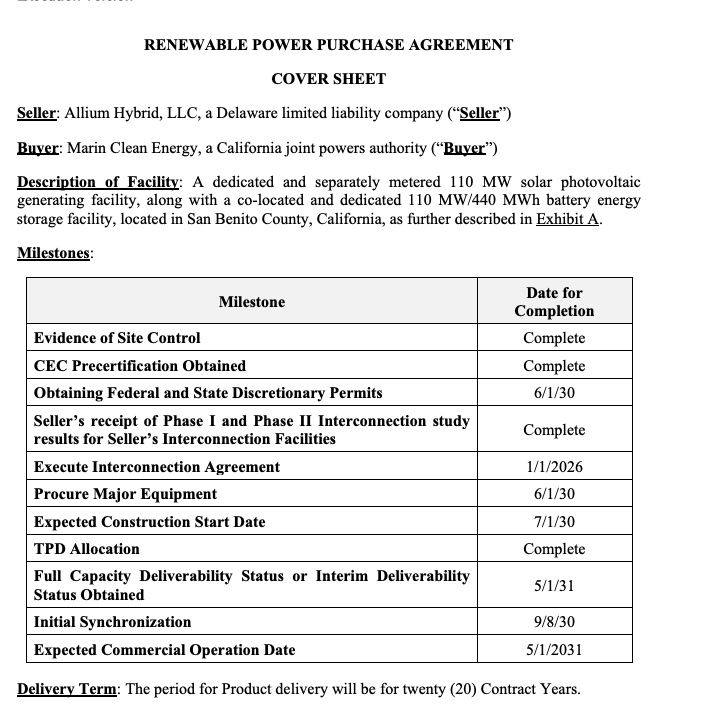
Allium Hybrid LLC, signed what is called a Power Purchasing Agreement (or PPA) with Marin Clean Energy, a community choice aggregator that serves Marin, Napa, Contra Costa, and Solano counties. This agreement was signed in February 2025, months before the project was formally proposed in San Benito County. To read the agreement you can view MCE’s technical committee agenda from 2.7.2025.
Some highlights from this agreement include:
- Commits Allium Hybrid LLC to develop and build a 110 MW solar and 440 MWh battery storage facility.
- Guarantees MCE exclusive rights to the electricity and storage output.
- Locks in a 20-year supply contract
- Displays that Allium Hybrid/Longroad Energy is committed to building, owning, and operating the site.
While the PPA confirms the project has secured a buyer and financial backing, it does not guarantee approval. The project must still complete environmental review and receive permits before construction can begin.
Proposal to Approval: Two Different Paths
County Level Approval
Longroad with the Allium project is currently working its way through county planning processes. Currently, this type of project is allowed on the zoning and general plan status applicable to this land. The local process will allow the county to negotiate standards or any additional community benefits that the county would like.
State Level Approval
As with housing, recent legislation and laws enacted in California provide large projects like this with special protections. Should the county deny the project, it is highly unlikely Allium would give up. In fact, AB205 (which has already been mentioned in a recent planning commission meeting) allows developers to apply for approval directly from the California Energy Commission, which can act as the lead permitting authority instead of the county.
Under AB 205, instead of applying only to the county, a developer can apply directly to the California Energy Commission. The CEC then becomes the lead permitting authority and conducts a full environmental review equivalent to CEQA.
This process includes:
• Environmental analysis
• Public comment and hearings
• Evaluation of environmental impacts
• Required mitigation measures
The CEC can approve, modify, or deny the project.
AB205 was passed to help California reach its goal of having 100% renewable and zero-carbon electricity by 2045. The big difference? The party that is negotiating on behalf of the community. Developers typically prefer the local route as it allows easier coordination with local agencies and improves community relations. Here is a blog explaining recent updates to AB205.
Because the developer has already signed a 20-year contract to deliver electricity beginning in 2031, there is a strong financial incentive to pursue approval rather than abandon the project.
Where Are We Now?
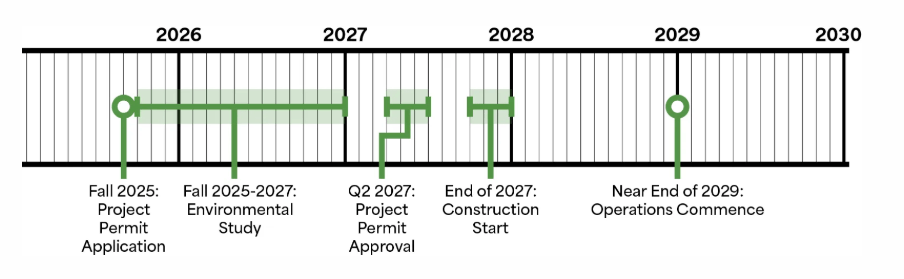
As of October 2025, the project’s proposal is deemed complete according to a letter sent to Allium by Senior County Planner Michael Kelly (see below). The letter states the project will go into environmental review and will proceed from there. The public will have opportunities for input throughout the review period.
The county is currently searching for on-call consultants to assist with planning and environmental reports via a recent RFQ process that is currently deemed pending. The RFQ and Letter of Completeness were notably issued on the same day. The county has recently seen a flurry of development proposals and will likely need assistance to navigate the proposals through the planning process.
There has not been a Notice of Preparation (or NOP) or any other environmental report notices issued by the county regarding this project. Given that the county has not hired its consultants yet, this makes sense.
Based on the current timeline, the project appears to be in the early stages of environmental review preparation. The next major milestone will likely be the issuance of a Notice of Preparation, which would formally begin CEQA analysis.
Stay tuned for more.


 The San Benito Blueprint
Leave a comment