
This is part 2 of a multi-part series that dives into state housing policy and its local impact on San Benito County. Part 1 can be located here. Once again we invite you to get comfortable with your beverage of choice and learn along with us!
- Builder’s Remedy Overview
- Recent Updates to the Builder’s Remedy Law:
- History of Builder’s Remedy
- Other HCD Enforcement Methods & Potential Fines
- Important to Understand Heading Into 2025
Builder’s Remedy Overview
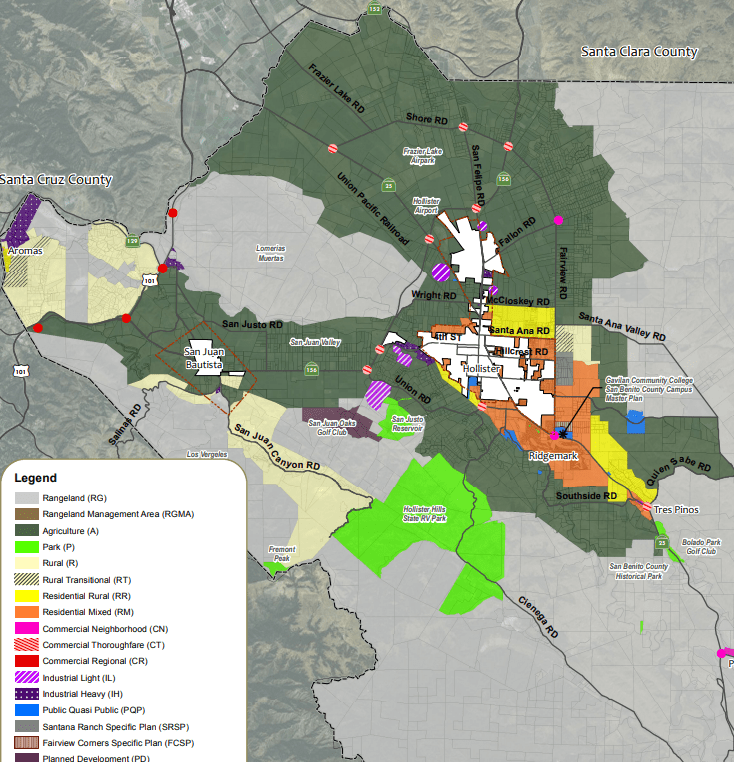
A quick refresh on Builder’s Remedy. Builders remedy is a provision that limits a local jurisdiction’s ability to reject housing developments provided they meet certain criteria, most notably a non-compliant housing element. Housing projects submitted under builders remedy do not necessarily have to comply with zoning regulations and density limits established by local governments. All 3 local jurisdictions (Hollister, San Juan Bautista, and Unincorporated San Benito County) currently qualify for Builder’s Remedy.
Builders Remedy law was recently updated as of January 1st 2025 to include new regulations. A high level summary is that a developer can qualify for builders remedy if one of the following conditions are met:
- 7% or more of all units are reserved for extremely low income
- 10% or more of all units are reserved for very low income
- 13% or more of all units are reserved for low income
- 100% of all units are for moderate income
- (Prior January 1st 20% of all units needed to fall under one or a mixture of the above buckets).
Builder’s remedy projects are permitted to build up to 3x the max zoning for a specific site, this is without density bonuses (we’ll go into that in a future article). Newer regulations require affordable units to have comparable bedroom and bathroom sizes to their market-rate counterparts.
Recent Updates to the Builder’s Remedy Law:
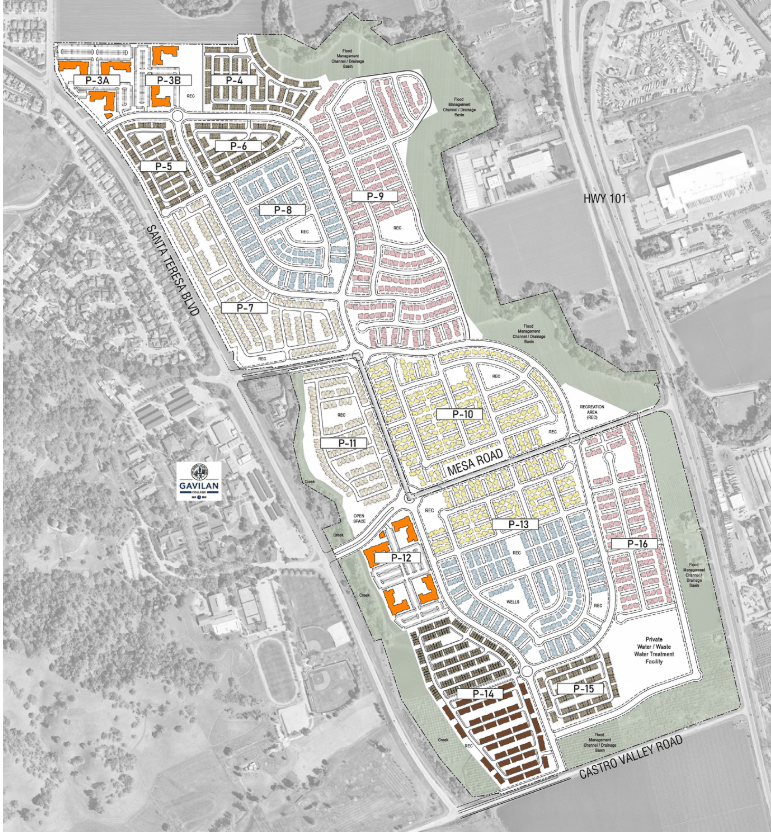
AB1893 introduced several revisions to Builder’s Remedy Law. A couple of which would apply directly to Unincorporated San Benito County.
Mixed Use Eligibility: Changes the definition of an eligible housing project for mixed-use proposals stating that the project has to be at least 50% housing, include at least 500 units, and meet the above affordability thresholds. Previously it required that 2/3rds of project be housing.
Local Agency Restrictions:
The recent law made significant changes to how local agencies interact with builder’s remedy projects.
- Qualifying Builder’s Remedy projects shall not require a general plan amendment, specific plan amendment, rezoning, or other legislative approval.
- Qualifying Builder’s Remedy projects shall be deemed consistent, compliant and in conformity with an applicable plan, program, policy, ordinance, standard, requirement, redevelopment plan and implementing instruments (or other similar provision) for all purposes, and shall not be considered or treated as a nonconforming lot, use, or structure for any purposes.
If you’d like to read a legal interpretation of the recent updates you can do so here.
History of Builder’s Remedy
We briefly introduced the concept of Builder’s Remedy in part 1 but where did it come from? Builder’s Remedy, though more widely used today, is not a new process. In fact the process was introduced in 1990 via an amendment to the Housing Accountability Act. It was not widely used due to fear of legal challenges from local jurisdictions and being viewed as a “risky planning move” by developers. You can read a more thorough history of Builder’s Remedy Law (up to 2017) here.
Other HCD Enforcement Methods & Potential Fines
Lawsuits and Fines: Jurisdictions that are out of compliance have been routinely sued and fined for non compliance. The examples of La Canada and Elk Grove are relevant here. The Attorney General now has many avenues to pursue fines for violations and non-compliance.
Ineligibility for State Funding: Jurisdictions who do not have a compliant housing element effectively lose out on money from several state programs including:
- The CalTrans Senate Bill (SB) 1 Sustainable Communities grant,
- The Affordable Housing and Sustainable
Communities program, - HCD’s Permanent Local Housing Allocation
Appointment of a Court-Appointed Agent: In severe cases of noncompliance, a court may appoint an agent to assume control over local land use decisions, thereby stripping the jurisdiction of its planning authority. Although this is an extreme measure, it is possible if violations are determined to be persistent.
Important to Understand Heading Into 2025

Understand Where We Are: We believe it’s important to understand the basics of the housing element and builder’s remedy heading into 2025 no matter what side of the local growth debate you sit on. These terms, processes, laws, and policies may or may not come into play in the near future. While all local jurisdictions have been eligible for over a year, recent updates to the law may increase the potential that we see them very soon.
Hollister 2040 Referendum: It’s also important that given current local events that we clarify: The Housing Element of Hollister is not being repealed by the referendum on The Hollister 2040 General Plan. The Housing Element is updated on a mandatory 8 year cycle while, according to The Governor’s Office of Land Use and Climate Initiatives, the general plan is simply required to be updated “periodically.” The referendum will however cause the Housing Element to conflict with Hollister’s previous General Plan, likely delaying compliance.
Coming Soon: The Housing Element Part 3: How Do We Obtain and Maintain Compliance?


 The San Benito Blueprint
Leave a reply to Builder’s Remedy: Betabel Pivots from Roadside Attraction to Housing – The San Benito Blueprint Cancel reply